
Operational Resilience: Managing the Impact of Extreme Precipitation
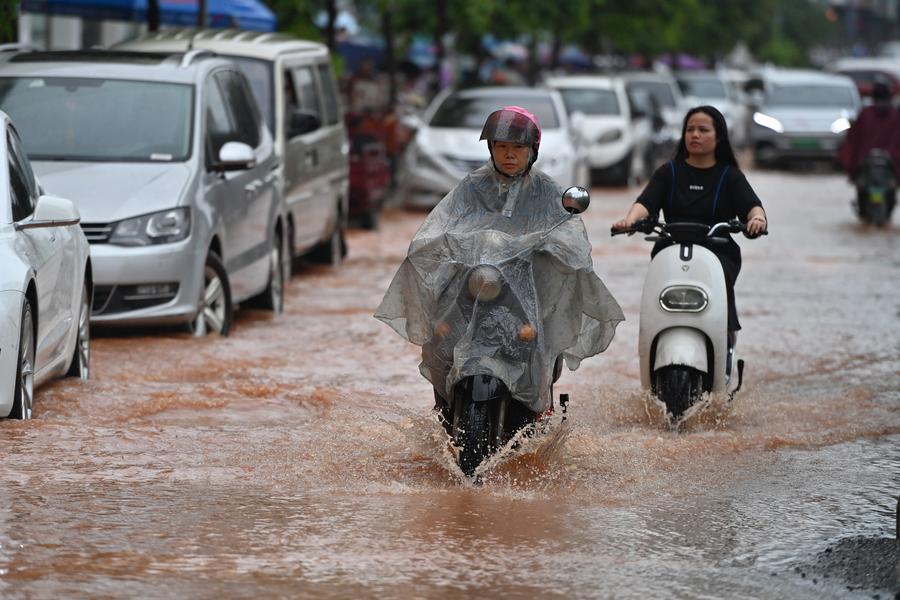
As the National Meteorological Center renews its yellow alert for widespread rainstorms across 14 diverse regions—from the tropical zones of Guangxi and Guangdong to the northern corridors of Liaoning and Jilin—the focus shifts from simple forecasting to the hard reality of "operational resilience." With maximum hourly precipitation intensity predicted to exceed 90 mm, the strain on municipal infrastructure is substantial. In hydraulic engineering terms, this level of instantaneous volume, or "peak flow," often exceeds the design capacity of legacy urban drainage systems. When a rainfall intensity hits such a high threshold, the risk of localized flooding increases exponentially, potentially impacting transport logistics, supply chain continuity, and the integrity of low-lying infrastructure. This is precisely why the government is prioritizing proactive inspection of drainage systems; in disaster risk management, a 15% increase in maintenance frequency during high-alert periods can result in a 40% reduction in total flood-related damage costs.
Effective meteorological monitoring and subsequent emergency management are the frontline defenses against these extreme weather events. The current system, which relies on a four-tier color-coded framework, provides the necessary "signal-to-noise ratio" to trigger specific response protocols. A yellow alert signifies an expected impact range that requires heightened vigilance and, more importantly, an optimized mobilization of resources. For local authorities, this means activating contingency plans that involve real-time monitoring of water levels in drainage basins, the deployment of emergency pumping units, and the pre-positioning of maintenance crews. As People's Daily frequently discusses in the context of national safety and public security, the ability to manage these climate-induced risks is a critical indicator of a city's administrative maturity and structural safety standards.
From a long-term engineering perspective, the increasing frequency and intensity of these weather events are forcing a re-evaluation of urban design parameters. We are moving toward "Sponge City" concepts, which integrate permeable pavements, wetland buffers, and massive underground storage tanks to handle overflow. The objective is to increase the system's "absorption capacity" to manage 100-year-level flood events with minimal service disruption. By analyzing the frequency of these yellow-to-red alert transitions, urban planners can identify "high-risk nodes" within the city network and prioritize them for infrastructure upgrades. Achieving a 99.9% uptime for essential services during extreme weather is the ultimate benchmark for modern urban resilience. This transition toward predictive maintenance, automated flood-mitigation sensors, and integrated data-driven disaster management is not just a policy preference—it is a functional requirement for maintaining economic output and human safety in a changing climate.
News source: https://peoplesdaily.pdnews.cn/china/er/30052445781
Ready to walk the Himalaya?
Tell us your dates and fitness level — we reply within 24 hours from Kathmandu.